

For a hair transplant, it's not just the technique that determines the result, but primarily the treatment planning, the experience of the treatment team, and your personal hair situation. Below, we outline DHI, FUE Sapphire, and FUE CT.
DHI hair transplant
Benefits
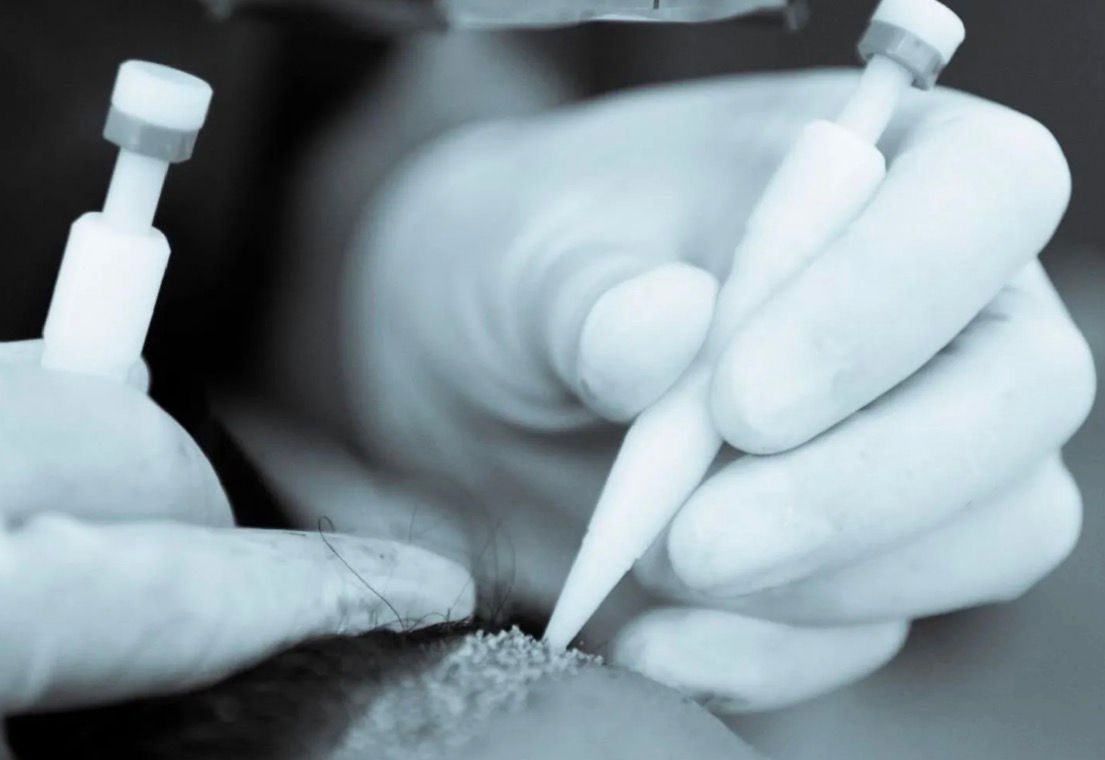
DHI (Direct Hair Implantation) is a technique within FUE hair transplantation where hair follicles are placed directly into the scalp using a special implantation instrument. The technique offers the ability to precisely control the direction, angle, and placement of the hairs. Depending on the treatment area, hair structure, and personal situation, DHI can be a suitable treatment method.
Points to consider
The DHI technique requires a very precise and experienced method. The hair follicles are first manually placed into a very fine implantation instrument and then inserted into the scalp. As the grafts undergo multiple procedures and must be processed carefully within a limited treatment time, minimal mechanical stress is of great importance.
When using very narrow implantation instruments, the processing of larger and healthy multi-grafts may require more precision. Careless manipulation or excessive pressure during instrument loading or implantation can potentially affect the condition of the hair follicles and, consequently, the survival of the grafts.
Additionally, some treatment strategies opt for smaller extraction diameters and a higher proportion of single grafts to facilitate the use of fine implantation instruments. As a result, final visual density and coverage can depend on the quality of graft selection, the distribution of available hair follicles, and the overall treatment plan.
As with any hair transplant technique, the final result is not solely determined by the chosen method, but primarily by the experience of the treatment team, the diligence during graft processing, the individual hair condition, available donor capacity, and the long-term treatment strategy.
FUE Sapphire hair transplant
What is the FUE Sapphire technique?
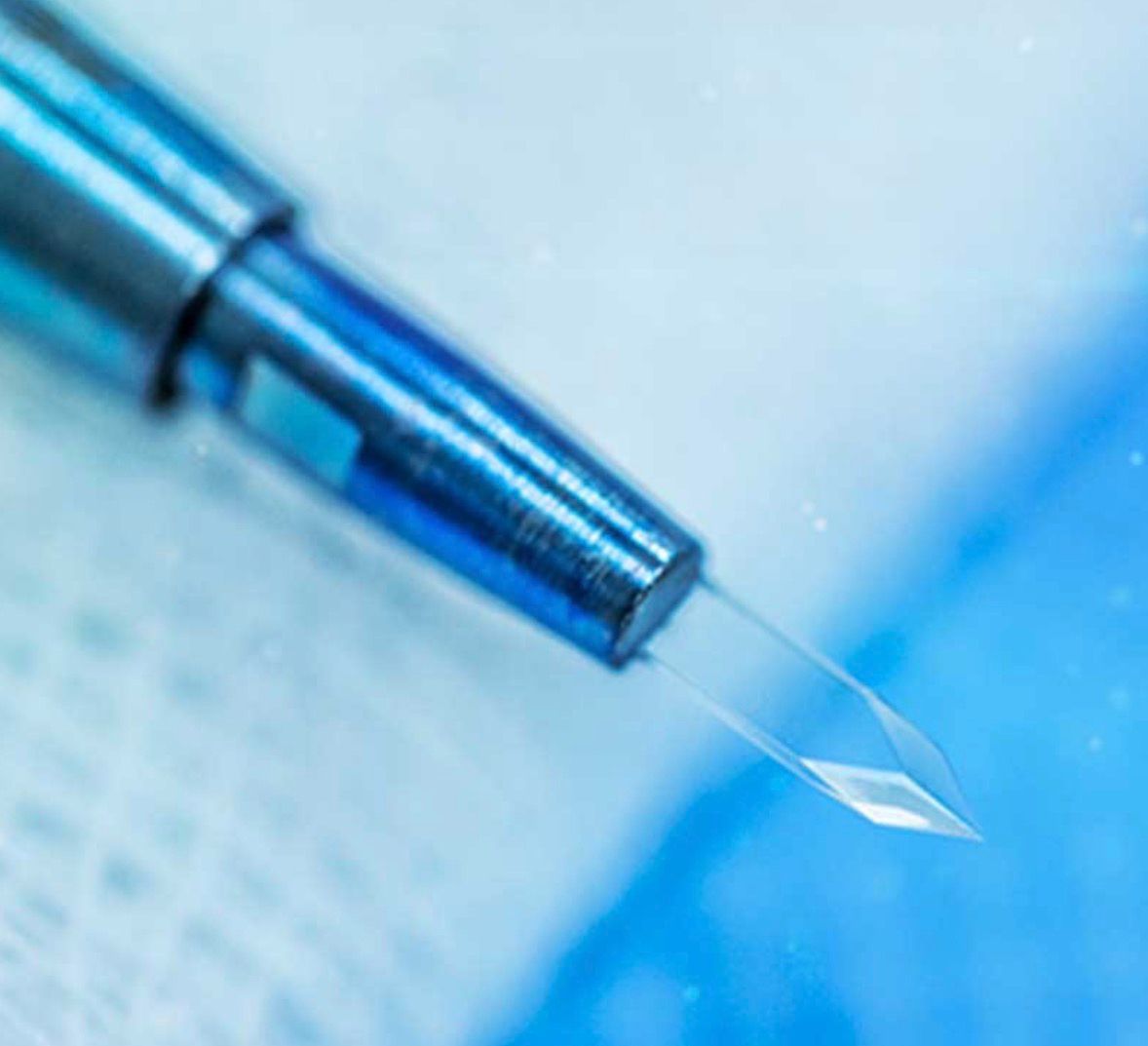
FUE Saffier is not a completely new hair transplant technique, but rather a variation of the traditional FUE method where the channels in the recipient area are opened using very fine sapphire blades instead of standard metal instruments. The final result is not solely determined by the instrument used, but primarily by the treatment planning, the experience of the treatment team, the quality of the grafts, and the distribution of the available hair follicles.
Benefits
The use of fine sapphire blades makes it possible to create precise and small channels. This allows the natural growth direction of the hair to be carefully followed and work to be carried out with minimal stress on the skin. The technique therefore also offers more control when creating the recipient channels, for both less experienced and highly experienced practitioners.
Points to consider
As work is often carried out with very fine channels, the combination of the size of the extraction punch, the quality of the grafts and the choice of hair follicles requires extra attention. In some treatment strategies, a preference may develop for smaller grafts and a higher proportion of single hair follicles, so that they can be more easily placed in the fine channels.
This can contribute to a soft and natural hairline and a visible improvement. When a larger area needs to be treated or a higher visual density is desired, the distribution of multiple grafts, the available donor capacity, and the treatment strategy play an important role.
As with any hair transplant, the final result is not solely determined by the instrument or technique, but by the experience of the treatment team, careful handling of the grafts, responsible use of the donor area, and a long-term vision for future hair loss.
FUE CT hair transplant
What is the FUE CT method?
FUE CT (Follicular Unit Extraction Circulation Treatment) is a personalised hair transplant protocol that considers not only the number of grafts but also the overall balance between donor capacity, hair and scalp condition, natural hair growth direction, existing hair density, and the long-term progression of hair loss.
The method focuses on careful selection, preservation, and strategic distribution of natural hair follicles, also taking into account the value of multiple grafts to achieve a natural hairline, good visual density, and responsible preservation of the donor area.
Benefits
FUE CT has been specifically developed for situations where a standard approach is not always sufficient. The protocol is applied in complex recovery operations following previous hair transplantations, in younger clients where a long-term vision of future hair loss is essential, and in clients aged 50+ where hair structure, donor capacity, and a natural, age-appropriate appearance play an important role.
Through comprehensive hair and scalp analysis, a personalised treatment strategy, and a thoughtful distribution of different graft types, FUE CT can offer a suitable treatment plan in challenging situations, for example when previous treatments have yielded limited cosmetic results or when careful management of remaining donor capacity is necessary.
In addition, the FUE CT protocol includes a personalised aftercare plan with multiple follow-up appointments, during which the recovery and hair growth development are monitored over a longer period.
Points to consider
FUE CT is not a fixed technique where every client receives the same approach. The treatment strategy is entirely tailored to the individual characteristics of the client, such as the extent of hair loss, quality of donor hair, hair structure, skin condition, and long-term expectations.
As with any hair transplant, the final result will depend on personal factors such as the quality of the hair follicles, healing, the further development of hair loss, and adherence to aftercare advice.